




Description
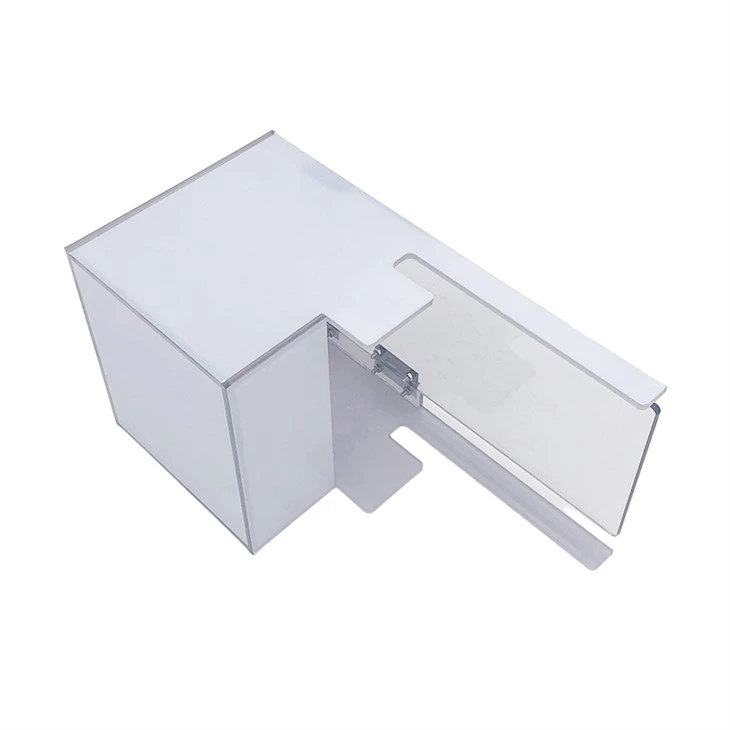
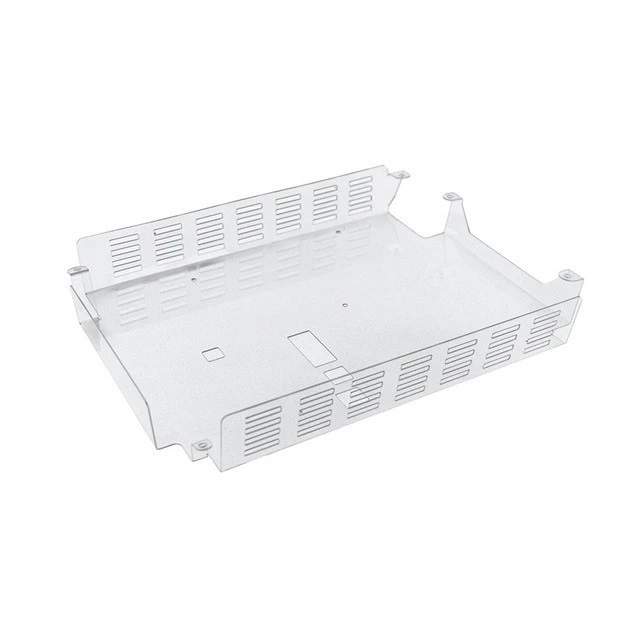
Customized manufacturing of PVC precision parts, CNC bending, CNC turning, and CNC milling services, fast sample production in 3-7 days.
Our Services
We provide customized solutions for different industries, from aerospace, medical components, electronics to the new energy industry, and more. CNC machining ensures the accuracy and quality of products.
At XYC, our ISO certified CNC workshop is specifically designed for rapid prototyping and small batch production of end use components. XYC CNC Factory provides you with 24-hour quotation service and rapid production of samples. We are your best choice for machining parts and can customize manufacturing according to your project requirements.
Machinable Range
|
Tolerance: |
+/-0.01mm(In CNC machining, The tolerance is largely influenced by the geometric shape and material type of the part. Specific tolerance details for different parts ) |
||
|
Roughness: |
Ra 0.1-Ra 3.2 |
||
|
Quality: |
DIN,ASTM,GOST,GB,JIS,ANSI,BS; |
||
|
Drawing format: |
PDF,DWG,DXF,IGS,STEP |
||
|
Authentication: |
ISO9001:2015,ISO4001:2015,RoHS,SGS; |
||
|
Size: |
Length 1600mm*length 850mm |
||
|
Material |
Steel: carbon steel, alloy steel, stainless steel, 4140, 20 #, 45 #, 40Cr, 20Cr, etc |
||
|
AL: AL6061,AL6063,AL6061,AL7075,AL5052,etc |
|||
|
Stainless steel: 201SS,301SS,304SS,316SS 17-4PH,etc |
|||
|
Brass: C37700,C28000,C11000,C36000,etc |
|||
|
Plastics:PTFE,PEEK,POM,PA,UHMW,PC,PBT,PVC etc |
|||
|
Surface Treatment: |
Steel |
stainless steel |
stainless steel |
|
Galvanization |
Burnishing |
Anodizing |
|
|
Black anodize |
Passivation |
Sandblasting anodizing |
|
|
Nickeling |
Laser marking |
Colorful anodizing |
|
|
Chroming |
Sandblasting |
Wire drawing |
|
|
Heat treatment |
Burnishing |
||
|
Powder coating |
Chroming |
||

PVC, short for polyvinyl chloride, is a polymer compound formed by the polymerization reaction of vinyl chloride monomers. PVC materials have excellent physical and chemical properties, making them widely used in industries such as construction, electricity, automobiles, and healthcare.
PVC materials have high hardness and strength, as well as good wear resistance, corrosion resistance, and temperature resistance. At room temperature, PVC material is a colorless and transparent solid, but with different additives, PVC material can also present different colors and shapes.


FQA
What is the processability of PVC?
PVC (polyvinyl chloride) is a common plastic material with good processability. The following are some important characteristics of PVC processability:
Forming processing: PVC can be processed by hot melting. At an appropriate temperature, PVC can melt into a flowing state, which can be injection molded, extruded, blow molded, or rolled. This makes PVC one of the ideal materials for comprehensive inspection of plastic product production.
Plasticity: The good plasticity of PVC means that it can be processed into various shapes after heating, while maintaining its processed shape after cooling. This plasticity makes PVC very useful in manufacturing products such as pipes, wires and cables, window frames, wall frames, boards, floors, etc.
Mixability: PVC can be mixed with other additives and fillers to change its performance and properties. By adding different additives such as plasticizers, stabilizers, fillers, pigments, etc., the pores, softness, weather resistance, flame retardancy, and other characteristics of PVC can be adjusted.
Machinability: PVC is cut and processed using common cutting tools such as cutting knives, saw blades, milling cutters, etc. This makes precise shape cutting, punching, and carving of PVC materials possible.
Adhesiveness: PVC can be bonded to itself or other materials. Common bonding methods include solvent bonding, hot melt bonding, and adhesive bonding. This enables the connection of different components in the production and assembly process of PVC products.
It should be noted that although PVC has good processability, it will release harmful hydrogen chloride gas and other toxic substances during the processing. Therefore, appropriate safety measures must be taken during PVC processing, such as in a well ventilated environment or wearing appropriate protective equipment.
Can CNC process plastics?
Yes, CNC (Computer Numerical Control) can be used for processing plastics. CNC is an automated machining technology that utilizes pre programmed instructions to control tools for precise cutting and machining on workpieces.
For plastic materials, CNC machining can provide positioning and repeatability. The following are some common applications of CNC processing plastics:
Part processing: CNC can process plastic parts through operations such as cutting, milling, and cutting tools. This is very useful for manufacturing plastic parts and components, such as plastic molds, mechanical parts, electronic casings, etc.
Engraving and engraving: CNC equipment can accurately carve and engrave on plastic surfaces by controlling the movement path of the cutting tool. This has been widely evaluated for the production of artworks, decorations, signage, and more.
Cutting and punching: CNC can perform precise cutting and punching operations based on pre programmed trajectories, used for the production of plastic sheets, films, pipes, etc.
Surface treatment: CNC machining can also be used to treat plastic surfaces, such as the production of scratches, textures, and holes, to understand the required appearance and roughness.
Rapid Prototyping: CNC machining can be used to manufacture plastic prototypes during the Rapid Prototyping process. By converting CAD models into CNC programs, plastic materials can be cut and processed into desired shapes using CNC machines, thereby creating rapid prototypes.
What are the 5 common types of CNC machine tools?
CNC milling machine: CNC milling machine is used for rotating cutting operations on workpieces. It uses rotating tools to remove materials from workpieces, creating planes, contours, and other complex shapes. CNC milling machines are widely evaluated for part processing and mold making in the manufacturing industry.
CNC lathe: CNC lathe is used for rotary cutting machining on workpieces. Unlike CNC milling machines, the main cutting motion of CNC lathes is the rotation of the workpiece, while the tool rotates and cuts along the workpiece. This makes CNC lathes suitable for manufacturing precision rotating parts such as shafts, drills, threads, etc.
CNC drilling machine: CNC drilling machine is used to operate workpieces on workpieces. It uses a drill bit to process holes into the workpiece. CNC drilling machines usually have automatic tool changing function, which can continuously process multiple holes in one program.
CNC bed: CNC bed is used for high-precision grinding operations on workpieces. It can be used for surface grinding, cylindrical surface grinding, gear grinding, thread grinding, and other grinding. CNC controls the rotation and movement of the grinding wheel to achieve precise grinding processes.
CNC cutting machine: CNC cutting machines are mainly used for cutting operations on sheet materials, such as metal sheets, plastic sheets, and wooden boards. It can be cut through tools, lasers, ion cutting, or water jet cutting. CNC cutting machines are widely used in fields such as metal processing, manufacturing, construction, and art design.
Hot Tags: CNC pvc parts, China CNC pvc parts manufacturers, suppliers, factory, CNC Nylon Parts, cnc aluminum block, peek 3d printing service, Custom Plastic CNC Machining Service, cnc acrylic signs, 3D Printing


